Beaconsfield Village Doesn't Set Its Own Prices. Its Neighbours Do.
September 10, 2026
September 10, 2026
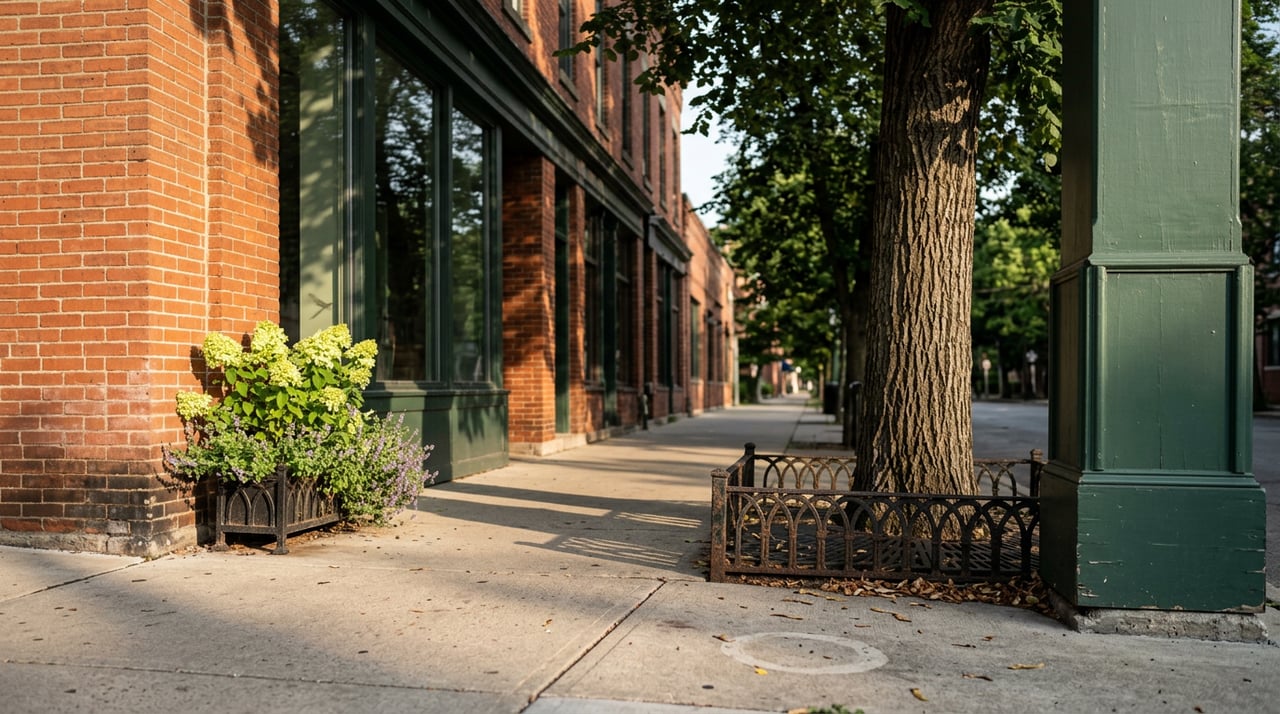
Stand at the corner of Argyle Street and Dovercourt Road and look up. The brick building on the corner still has its original loading bay arches, wide enough for a horse-drawn bakery wagon to pull through with the day's bread. A century ago this was the Ideal Bread Factory. Today it's the Argyle Lofts, 86 units behind exposed brick and steel-sash windows, and if you ask three listing agents what neighbourhood you're standing in, you'll likely get three answers. One will say Trinity Bellwoods. One will say West Queen West. The name on the map is Beaconsfield Village, the pocket bounded by Dufferin Street, Dundas Street West, Ossington Avenue, and Queen Street West, but almost nobody selling here leads with it.
That habit isn't just marketing shorthand. It's the reason the neighbourhood's own pricing data contradicts itself.
In mid-2026, one national listings aggregator quoted the average price across every active Beaconsfield Village listing, condos and houses combined, at $984,274, up 6.26 percent from a year earlier. Weeks later, in early July 2026, the same site's page for houses specifically in Beaconsfield Village put the average listing price at $1,038,020, up 5.05 percent. Same neighbourhood, same data provider, six weeks apart, and two averages with two different growth rates that don't reconcile with simple math.
That isn't a typo. It's what happens when a pocket this small gets asked to produce one number for a housing stock that shares almost nothing else in common. A one-bedroom hard loft, a fully gutted three-storey semi, and an original-condition Victorian still waiting on a new electrical panel all get folded into the same neighbourhood average, and the figure that comes out the other end describes none of them accurately.
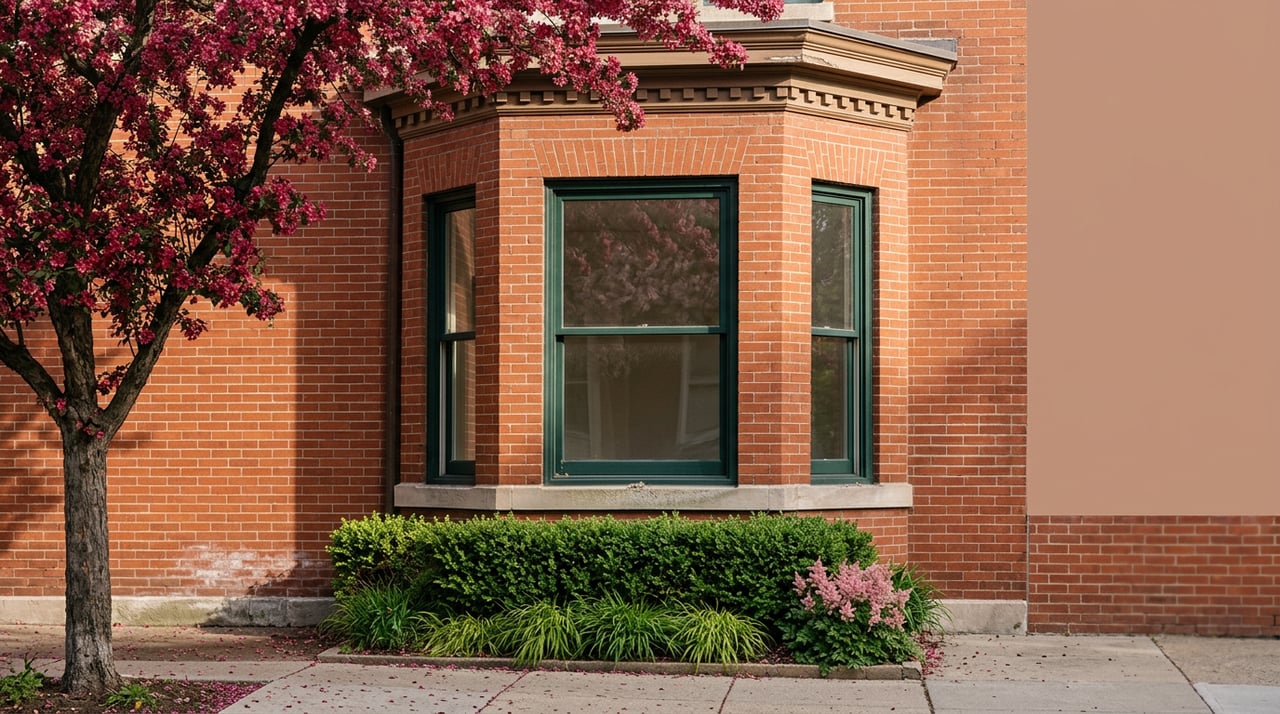
Walk the six blocks between Dufferin, Dundas, Ossington, and Queen and you pass through three distinct housing eras, all marketed under one neighbourhood name.
| Housing type | Era | What you're actually buying |
|---|---|---|
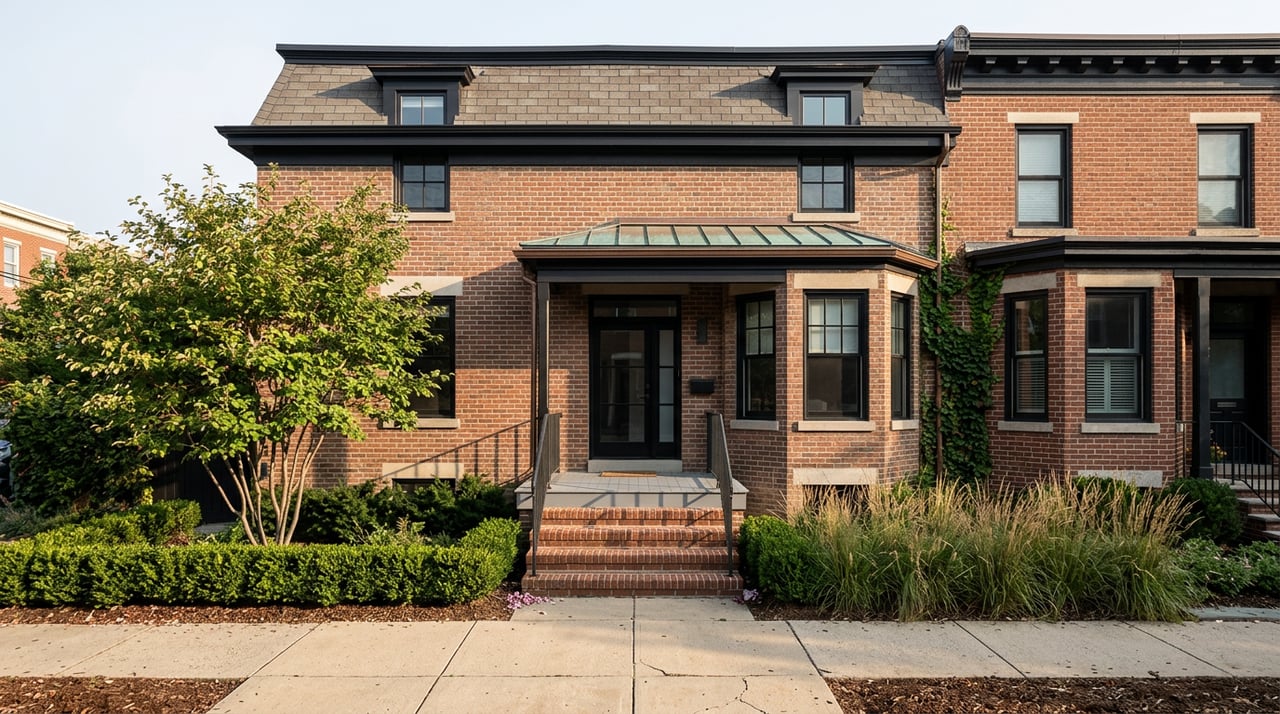
| Original-condition Victorian semi or row house | 1880s to 1890s | Toronto Historical Board-recognized architecture on Beaconsfield Avenue, likely paired with knob-and-tube wiring, an untouched foundation, and plaster walls that haven't been opened in decades |
| Fully renovated Victorian | Same shell, rebuilt interior | New systems and an open layout, with the price already reflecting someone else's finished renovation |
| Argyle Lofts hard-loft unit | Shell built 1919, converted 2007 | Exposed brick and beam ceilings, in units running from roughly 485 to more than 1,800 square feet, inside one 86-unit building |
Three different products, one shared address on the listing sheet.
The Argyle Lofts alone breaks the idea that you can average your way to a fair price here. John Dempster ran a bakery and grocery on the site starting in 1873. The Ideal Bread Company rebuilt the property in 1919 in an Edwardian classical style, using the ground floor to ship thousands of loaves a day off Argyle Street, before the factory closed in 1957 and the building sat as an industrial shell for decades. It reopened in 2007 as 86 residential lofts, and the conversion kept the building's uneven bones intact: ceilings run 12 feet on floors one, two, and five, drop to 9 feet on the fourth floor, and open up to 16.5 feet on the third and sixth.
Try comparing that building's price per square foot to a Victorian semi one block over and the math will compute. It just won't mean anything. You're not comparing two houses. You're comparing a converted factory floor to a century home, and the neighbourhood average has no way to tell you which one you're actually looking at.
If you're eyeing an original-condition Victorian because the asking price looks lower, the renovation math matters more here than in most Toronto neighbourhoods. As of 2026, a standard full renovation on a Toronto century home runs $150 to $400 per square foot, and a full gut with new wiring, plumbing, and structural work runs $400 to $550 or more per square foot. On a typical 1,600 to 1,800 square foot Victorian semi, that puts most serious projects between $250,000 and $600,000, before underpinning the basement, which adds another $40,000 to $90,000 on its own.
That means the raw Victorian priced $150,000 under a finished one three doors down isn't automatically the better deal. It's a different project with a different total cost, and the neighbourhood's blended average tells you nothing about which project you're buying into.
The borrowing runs in one direction more than the other. Renovated Beaconsfield Village properties tend to sell for less than comparable renovated homes in neighbouring Little Italy, which sounds like a value story until you notice how that comparison gets used. One listings data provider frames Beaconsfield Village pricing explicitly against Little Italy rather than establishing its own baseline. That's the tell. A neighbourhood secure in its own comps doesn't need another neighbourhood's name to explain what its homes are worth. Beaconsfield Village keeps getting sold as the discount version of somewhere else, which keeps its own sales history thin, and a thin sales history is exactly why the next average anyone quotes for it will be just as unstable as the last two.
Beaconsfield Village isn't underpriced or overpriced. It's under-measured. The neighbourhood is real, but the number meant to describe it belongs to three other places at once.
If you're cross-shopping Beaconsfield Village against Trinity Bellwoods, Little Italy, or West Queen West, the published average is the least useful number on the listing sheet. Ask instead:
A pocket this small rewards buyers who ask for the specific comp, not the blended one.
Is Beaconsfield Village its own recognized area, or part of Little Portugal? Both, depending on who's mapping it. Beaconsfield Village is the sub-area bounded by Dufferin Street, Dundas Street West, Ossington Avenue, and Queen Street West, sitting inside the larger Little Portugal district. It appears as its own community on major listing platforms, but its street-level identity shifts depending on whether an agent is describing it as Trinity Bellwoods, West Queen West, or Little Italy adjacent.
Is a hard loft at the Argyle Lofts a reasonable alternative to a Victorian house here? It depends what you're weighing it against. A loft unit skips the renovation math entirely, since the building's structure and systems were addressed during the 2007 conversion, but you're buying industrial-era proportions rather than a period home, and ceiling height varies by several feet depending which floor you're on.
Why does the renovation cost gap matter so much specifically in this neighbourhood? Because the housing stock is almost entirely 1880s to 1890s construction with no in-between era to soften the comparison. A renovated and an original-condition home on the same block can carry list prices $100,000 to $150,000 apart, but once you add a $250,000 to $600,000 renovation and possible underpinning, the true cost gap is often larger than the sale price difference suggests.
Buying or selling in a neighbourhood that gets described five different ways by five different agents takes someone who starts with the specific building, not the blended average. Christina Cruise has spent thirteen years working both sides of Beaconsfield Village's borrowed borders, from renovation-ready Victorians to converted lofts, and can tell you which number in a Beaconsfield Village listing to trust and which one to set aside. Let's Connect.
Stay up to date on the latest real estate trends.
New Development
DISCOVER WHY MORE HOMEBUYERS ARE CHOOSING FORT ERIE
Christina’s approach is built on listening first—understanding your goals, timeline, and must-haves before crafting a tailored strategy. Whether you’re buying your first home, selling a family property, or investing in Muskoka, she guides you through every step with clarity and confidence.
(905) 321-5873
[email protected]
2484 Bloor St W Unit 19
Toronto, ON M6S 0A1