Trinity Bellwoods Home Prices: What Really Drives Value
August 27, 2026
August 27, 2026
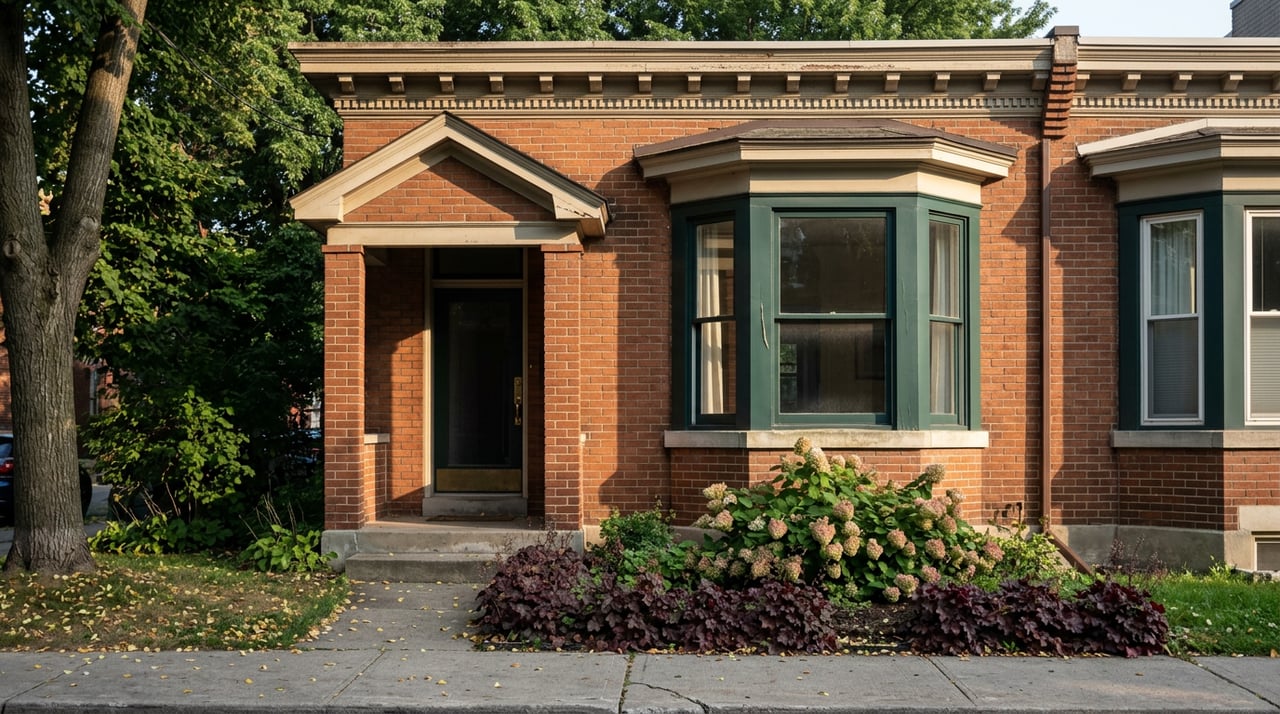
In April 2026, three semi-detached houses sold within blocks of each other in Trinity Bellwoods. One, on Crawford Street, listed at $2,649,000 and closed at $2,350,000, nearly 11 percent under ask. Another, on Grace Street, listed at $1,999,000 and closed at $2,200,000, about 10 percent over ask. A third, on Markham Street, listed at $1,649,000 and closed at $1,680,000, a modest 2 percent premium. Same month, same housing type, same fifteen-minute walking radius. The spread between the best and worst outcome was more than 20 percentage points.
If you have been watching the portals, you have already seen a number attached to this neighbourhood. Depending on which site you check, that number is $1,385,786 (the average recorded sale price), $2,105,000 (the average detached listing), or $1,930,288 (the average listing across all types, reportedly down close to 14 percent year over year). None of these figures are wrong. They are also not describing the same market, and none of them would have told you which of those three April semis to bid on.
This isn't a data quality problem. It's a composition problem. Trinity Bellwoods currently has a mix of roughly 16 detached houses, 12 condos, and 39 townhomes listed at any given time, according to recent MLS-sourced inventory data. Average condos list around $975,000. Average detached listings sit above $2.1 million. Average townhomes land near $1.82 million. Blend those three product categories into one "neighbourhood average" and you get a number that describes no actual house for sale.
This is the same distortion that shows up whenever a market report explains a swing in average price by noting that the mix of homes sold has shifted, not that values themselves moved. A month with more condo closings pulls the average down. A month with a couple of large Victorian sales pulls it up. Reading the neighbourhood average as if it were the price of a typical home is like reading the average temperature of a building that has a walk-in freezer on one floor and a sauna on another.
What the blended number hides is that Trinity Bellwoods is really three distinct housing products trading at three different logics.
The mistake buyers make is assuming that because all three layers share a park and a postal code, they share a price logic. They don't. A condo buyer and a Shaw Street buyer aren't really competing for the same asset. They're barely in the same market.
If housing type doesn't fully explain the April spread between Crawford, Grace, and Markham, what does? The Globe and Mail's real estate "done deal" column, which tracks individual Toronto sales with the listing agent's commentary, gives a consistent answer across several recent Trinity Bellwoods transactions: pricing strategy and presentation move the needle more than the specs sheet.
When a stacked townhouse near the park sold within 48 hours in April 2026 for $15,000 over its $1,095,000 ask, agent Keegan Irwin credited a specific tactic rather than the market itself. He priced the listing where he expected it to land and skipped a fixed offer date, telling the Globe that offer dates can scare buyers away in this kind of market and that pricing a touch under the expected value tends to produce that value, while pricing high tends to produce a discount.
A different Trinity Bellwoods sale shows what happens when pricing gets ahead of a renovation. A redesigned four-bedroom house up the street from the park listed for nearly $4.9 million in July 2025. The first offer, received within two weeks, was declined. Weeks later the ask was cut by $349,000 to $4.55 million, which is what brought the original buyer back to the table, and the house eventually closed at $4.275 million in October, well below where it started.
"You can see a lot of listing terminations and relists across the board in a lot of areas," agent David Peres, who handled the sale, told the Globe.
That's the same mechanic the April 2026 numbers hint at, even without a quote attached to every address. An overpriced semi corrects downward, the way Crawford Street's closed 11 percent under its $2,649,000 ask. A calibrated one draws a premium, the way Grace Street's closed 10 percent over its $1,999,000 ask. Markham Street, priced closer to where it landed, closed within 2 percent of ask. None of that shows up in a neighbourhood average. It shows up address by address.
Shaw Street deserves its own mention because it's the clearest illustration of why one number can't describe this neighbourhood. It contains a modest detached house that closed right at its $1.385 million ask in May 2026 with two bedrooms plus a den. It also contains century homes on wider lots, some with detached two-car garages and documented laneway house potential, that are marketed and priced as an entirely different category of asset. A recent listing at 230 Shaw Street, sitting on a 19 by 121.5 foot lot, was described as functioning like a fully detached home with no shared walls, a distinction that matters because most of the street's housing stock is semi-detached or narrower.
The address alone tells you almost nothing. Lot width, whether the garage can support a laneway suite, and whether the house has already been split into legal units or could be, these are the variables that separate a Shaw Street house that trades like any other semi from one that trades like a small development site.
The practical takeaway isn't that Trinity Bellwoods is unpredictable. It's that the neighbourhood-wide average is the wrong tool for pricing any specific decision. A buyer comparing two semis three blocks apart needs the recent comparable sales for that housing type and that condition, not the blended average across condos, rows, and detached Victorians. A buyer eyeing a wider lot needs to ask specifically about laneway or coach house potential, because that single fact can separate a $1.4 million sale from a $2.6 million one on paper-thin differences in frontage.
If you're the one selling into this market, the same logic cuts the other way. The April numbers suggest that an accurately priced, well-presented semi in Trinity Bellwoods can still draw a double-digit premium in the same month that a similar house down the street settles for double digits under ask. The difference isn't luck. It's whether the list price reflects what the house actually is, not what the neighbourhood average implies it should be.
Is Trinity Bellwoods currently a buyer's market or a seller's market? The honest answer is that it's both, depending on price point and housing type. The April 2026 data shows properties selling both meaningfully over and under ask within the same weeks, which points to a market that rewards precise pricing more than it rewards a general read on "conditions."
Does a coach house or laneway suite automatically add value to a listing? Potential matters, but it has to be documented. Listings that reference a feasibility review, as one recent Trinity Bellwoods corner-lot listing did with a laneway suite assessment, are giving buyers something concrete to underwrite. A vague mention of "laneway potential" without that groundwork is worth far less.
Should I trust the average price a portal shows me for this neighbourhood? Treat it as a starting orientation, not a planning number. Given how far apart the average condo, average townhome, and average detached price sit in Trinity Bellwoods, the blended figure will rarely match the specific house you're evaluating.
If you're trying to figure out which layer of this market actually fits your budget and your plans, whether that means a condo, a row house, or a wider lot with room to add value, Christina Cruise can walk through the current comparables with you street by street. Let's Connect.
Stay up to date on the latest real estate trends.
New Development
DISCOVER WHY MORE HOMEBUYERS ARE CHOOSING FORT ERIE
Christina’s approach is built on listening first—understanding your goals, timeline, and must-haves before crafting a tailored strategy. Whether you’re buying your first home, selling a family property, or investing in Muskoka, she guides you through every step with clarity and confidence.
(905) 321-5873
[email protected]
2484 Bloor St W Unit 19
Toronto, ON M6S 0A1