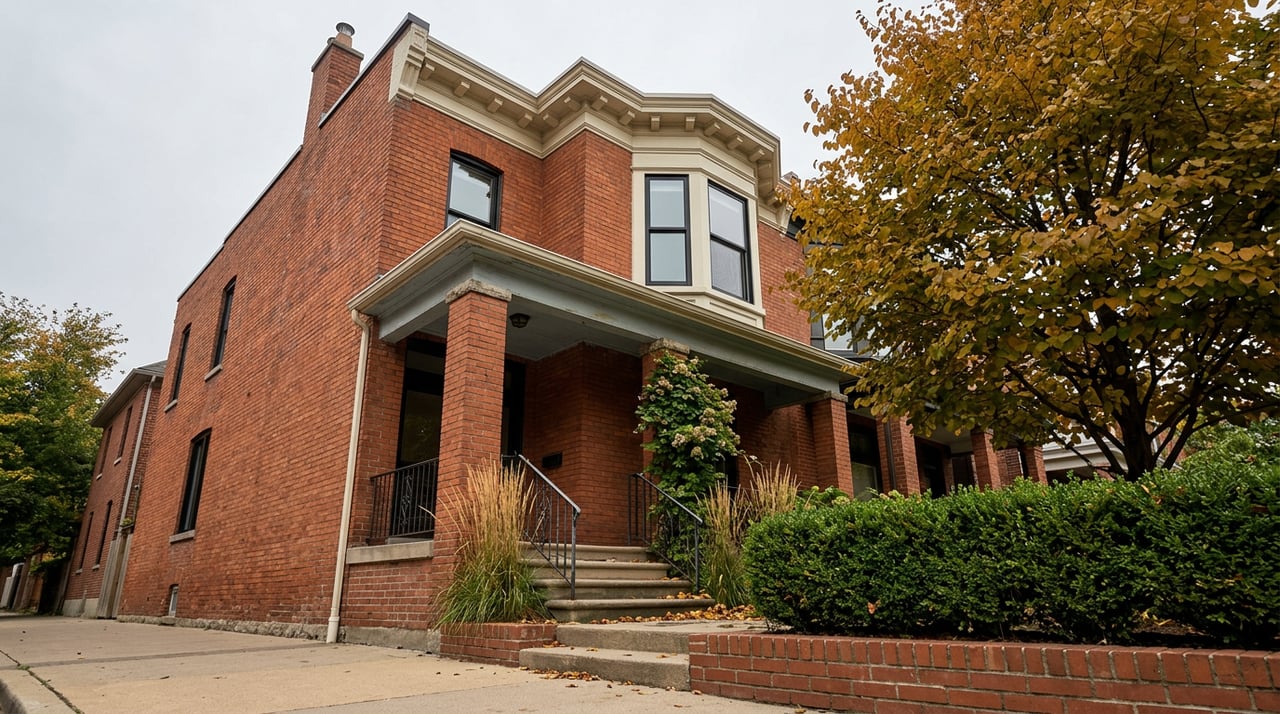
Saturday morning starts the same way it always does for most people on this street. Coffee at Reunion Coffee Roasters, the flagship location at Roncesvalles and Lynde. A walk with the dog past Sorauren Park. Maybe a stop at Frock, the independent clothing shop that has carried local and international designers on the strip since 2003. Then home, probably on the King streetcar, the way you always get home.
Not this month. On September 19 and 20, the Roncesvalles Polish Festival takes over the avenue for its 20th edition, and the street stops behaving like the one you know across the weekend. Some of what changes is obvious. The streetcar reroute is one change worth knowing before you head out.
What Actually Closes, and For How Long
The festival runs Saturday from 11 a.m. to 11 p.m. and Sunday from 11 a.m. to 7 p.m., closing Roncesvalles Avenue to vehicle traffic for the stretch between Boustead Avenue and Grafton Avenue. It's free, it's pedestrian only for those hours, and organizers are expecting more than 600,000 people to pass through across the weekend, according to BlogTO's coverage of the event. That's not a typo. This is the largest Polish cultural festival in North America, and the 2026 run marks its 20th year on this specific stretch of avenue.
The scale this year includes more than 40 local restaurants and bakeries setting up sample plates and expanded patios, roughly 150 small businesses participating in some form, and a separate vendor exhibition drawing about 90 merchants selling everything from Polish imports to general artisan goods. Four stages will run continuous programming, with around 40 performances scheduled across the two days, per BlogTO's reporting. If you're used to Roncesvalles as a street with maybe two or three restaurants busy on a given Saturday night, this is a different order of magnitude entirely.
How the King Streetcar Route Changes During the Festival
Here's the detail that catches longtime residents off guard every year. The 504 King streetcar, which normally runs the length of Roncesvalles Avenue, does not follow that route during the festival. According to the festival's own transit guidance, the King car stops at the foot of Roncesvalles instead, meaning if you're used to riding it home up the avenue, that ride simply isn't available during festival hours.
The workarounds are straightforward once you know them:
- Take the Bloor subway to Dundas West Station and walk one block south to Roncesvalles. The station is wheelchair accessible.
- The 505 Dundas or 506 College streetcar will get you to the top of Roncesvalles, and the 501 Queen car reaches the south end.
- If you're driving in from Lakeshore Boulevard, exit at Parkside Drive, head north to Howard Park Avenue, and you'll reach Roncesvalles from there. Parking on the avenue itself won't be an option during festival hours.
None of this is complicated once you've planned around it. It's only a problem if you assume your normal Saturday commute holds and find out otherwise at the stop.
Twenty Years of the Festival, Longer for the Street Behind It
The festival itself turns 20 this year, but the organization running it has deeper roots. The Roncesvalles Village BIA, which produces the event, formed in 1996 through a merger of the Upper Roncesvalles BIA, established in 1984, and the High Park BIA. That's three decades of institutional continuity behind an event that's only been running for two, which says something about how this neighborhood tends to build things that last.
New this year is a Polish culinary component being added to the programming, according to the BIA's event page, the first time the festival has formalized a dedicated food and culinary track alongside its usual mix of polka bands, folklore dance groups, and the Saturday night Dance Under the Stars. The festival also keeps its two symbolic ambassadors, a Starosta and Starościna dressed in traditional Polish royal attire, who walk the street throughout the weekend as a nod to the event's cultural roots.
The Regulars Don't Change, Even When the Weekend Does
Part of what makes the festival work on this particular street is that it doesn't need new anchors to draw a crowd. Cafe Polonez, at 325 Roncesvalles, has been serving pierogies and cabbage rolls for more than 30 years and will be one of the restaurants running an extended patio through the festival. The Revue Cinema, with its Edwardian exterior and Art Deco detailing, is Toronto's oldest still-screening repertory theatre and predates most of the buildings around it. Reunion Coffee Roasters' corner location will almost certainly have a line out the door both days, festival or not.
These are useful landmarks if you're trying to navigate the crowd rather than fight it. If you know Cafe Polonez marks roughly the middle of the strip and the Revue sits a few blocks north, you can plan where to meet people or where to duck into a side street when the sidewalk gets too tight.
What Isn't Part of This, and Runs on Its Own Schedule
It's worth separating what belongs to the festival from what belongs to Roncesvalles year round. Sorauren Park's Monday farmers market is unaffected. It's been running on that schedule for years and has nothing to do with the September weekend. The Roncy Flea, held at the Roncesvalles United Church at 240 Roncesvalles Avenue, draws more than 50 vendors selling vintage furniture and handmade goods on its own separate calendar, most recently running a free, rain-or-shine edition in August. Neither of these moves or pauses because the Polish Festival is happening. They're fixtures with their own rhythm, independent of whatever else is filling the street that particular weekend.
That distinction matters if you're new to the neighborhood and trying to figure out which events are annual traditions versus which ones only happen because a storefront decided to host something. The festival, the Monday market, and the flea all fall into the first category. They show up whether or not the businesses around them have changed hands since last year, which on a street with this much retail turnover is its own kind of stability.
If you've lived here through a few Septembers already, none of this is a surprise. If this is your first festival weekend on the avenue, the biggest adjustment isn't the crowd. It's remembering that your regular ride home won't take you where it usually does, and building five extra minutes into whatever plan gets you back to your door.
For anyone thinking further ahead about what it means to live on a street like this year round, from the foot traffic patterns to how a place like Roncesvalles holds its character even as the storefronts turn over, Christina Cruise is always glad to talk through what that looks like in practice. Let's connect.