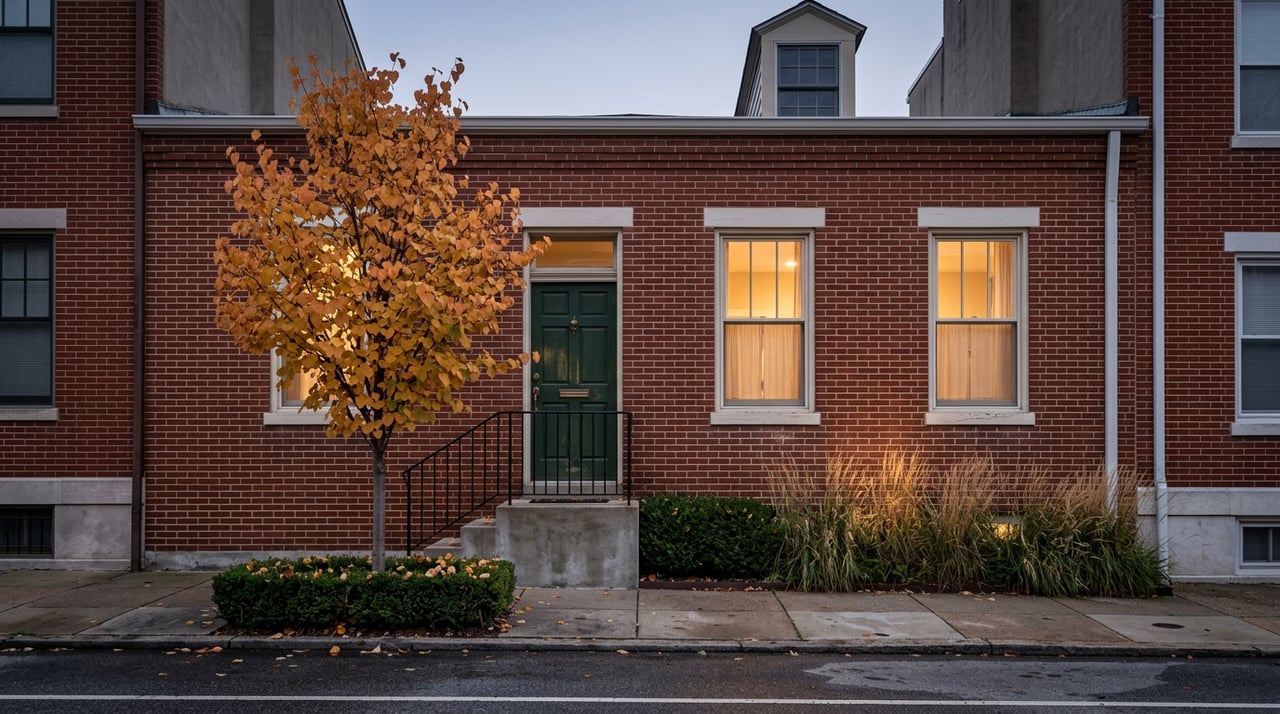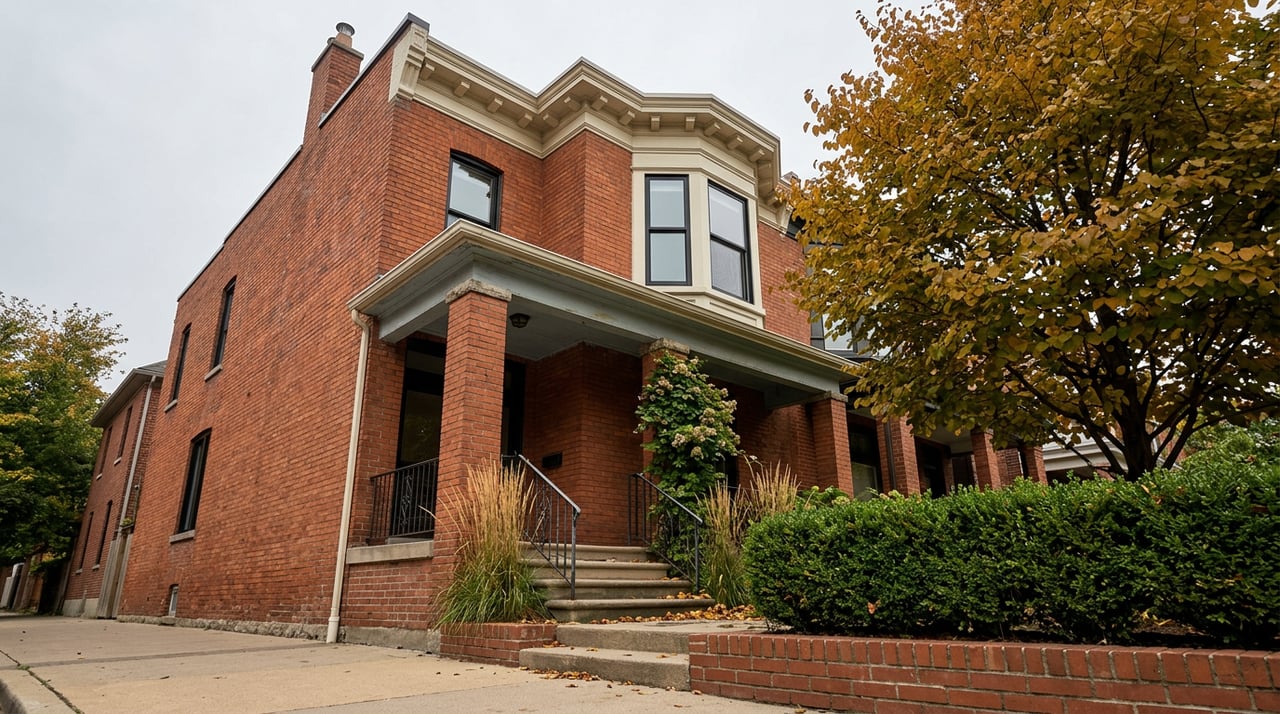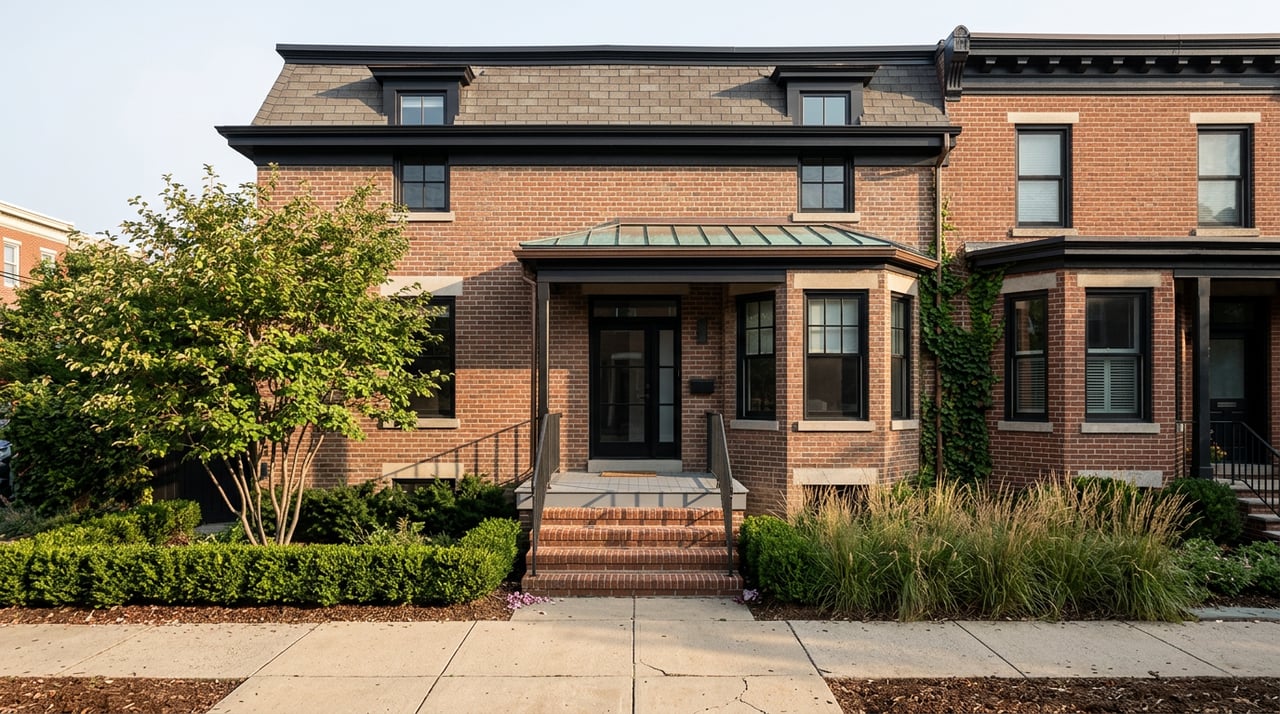
An inspector working a century semi off Roncesvalles Avenue spends most of the appointment in two places: the electrical panel and the attic. In the attic, the flashlight finds white porcelain knobs threaded along the joists, cloth-wrapped wire running between them. Everyone in the room assumes the conversation that follows will be about the house's age and whether the street's heritage character limits what a new owner can do to it. It rarely is. The conversation that actually slows a Roncesvalles closing starts with an insurance broker, not a heritage planner.
That mismatch between the worry buyers bring to the table and the one that actually costs them time and money is the story of this neighborhood's housing stock right now.
The Question Everyone Asks First
Roncesvalles reads as heritage from the sidewalk. The Polish parish churches along the avenue, the marquee at the Revue Cinema, the Edwardian apartment blocks between Queen Street West and Dundas Street West all signal a streetscape someone has been protecting for a long time. Buyers touring a semi near Sorauren Park or a detached house close to St. Joseph's Health Centre often ask the same first question: how much can I actually change here without fighting City Hall?
It's a reasonable question, and a group of residents once asked City Council the same thing at a larger scale, petitioning for the length of Roncesvalles Avenue to be designated a full Heritage Conservation District under Part V of the Ontario Heritage Act. That petition never became a district designation. The protections that exist on this strip today are individual, not blanket.
What's Actually on the Register
Two properties carry the weight of Roncesvalles' heritage reputation. The Revue Cinema at 400 Roncesvalles Avenue holds its own designation, according to the Parkdale Village Historical Society. So does 421 Roncesvalles Avenue, designated under Part IV of the Ontario Heritage Act in 2017 for its design, its history, and its contribution to the streetscape. That designation held up in 2018 when City Council refused an application to demolish the building for a seven-storey commercial project, a decision documented in the City's own planning records.
Individual Part IV designation is not the same as a Heritage Conservation District. A district designation, defined under the Ontario Heritage Act, governs an entire area and requires a Heritage Permit for exterior alterations across every property inside it. Toronto has created 27 of these districts since 1985, and Roncesvalles is not one of them. The residential streets behind the avenue are where most of the neighborhood's housing stock actually sits.
The Wiring Underneath Every One of These Streets
The detail that does apply almost universally here is less visible and less discussed. Roncesvalles' housing stock is overwhelmingly Edwardian, built between roughly 1905 and 1925, and knob-and-tube wiring was the standard installation method across Canada through the 1940s. Electrical contractors working the west end routinely describe the same layered problem in these homes: original knob-and-tube still live in the walls and attic, sometimes joined decades later by a 1970s aluminum wiring addition when the owner extended the house or finished a basement, with neither system ever fully removed.
Plaster walls, common in homes built before 1930, make the wire-fishing part of a rewire slower and more expensive than it would be behind drywall, and homes with finished basements or renovated attics lose the open joist bays an electrician would otherwise use to route new circuits efficiently. None of this is a Roncesvalles-specific defect. It's what a 1910s semi looks like underneath, anywhere in old Toronto. What is worth understanding is what happens next, because that part moves faster than most people expect.
Why the Insurance Letter Beats the Heritage Letter
A Heritage Permit review, when one is actually required, typically takes four to ten weeks and the process is collaborative. An insurer's response to discovering active knob-and-tube wiring is neither collaborative nor slow. Homeowners who disclose it on a renewal questionnaire, or whose broker finds it during a claim, are commonly given 60 to 90 days to remediate before the policy is cancelled outright, and a renewal premium can jump 15 to 30 percent in the meantime. Roughly 40 percent of Ontario insurers won't write a policy on a home with active knob-and-tube at all, and much of the remainder charge a real surcharge to do it.
Full remediation costs money and it costs it on a specific schedule. Here's what electricians serving Toronto's older neighborhoods are quoting for 2026:
| Item | Typical 2026 Range |
|---|---|
| Full rewire, 2-storey home with plaster walls | $8,000 – $15,000 |
| Larger or structurally complex Edwardian rewire | $20,000 – $30,000 |
| Electrical panel upgrade (100A or 200A) | $1,500 – $3,000 |
| Service entrance conductor replacement | $1,500 – $3,500 |
| ESA permit and inspection fees | $200 – $500 |
| Plaster or drywall patching after wire runs | $500 – $2,000 |
A Federal Pioneer Stab-Lok panel, common in homes that had electrical work done mid-century, gets flagged for replacement by both insurers and the Electrical Safety Authority regardless of its rated capacity, which means a home can need a panel swap even if the knob-and-tube itself is otherwise contained. The document that actually closes out the insurance problem is the ESA Certificate of Inspection, issued once a licensed electrical contractor completes the rewire and the ESA signs off. Without it, as far as most insurers are concerned, the rewiring never happened.
Active Wiring Is the Trigger, Not Age
One distinction gets lost in most conversations about this, and it matters for anyone who bought a Roncesvalles house from an owner who did a partial renovation. Insurers and the ESA generally distinguish between active knob-and-tube, meaning wire that's still energized and doing work, and abandoned knob-and-tube, meaning it was disconnected at the panel during a prior renovation and left in the walls. Abandoned wiring, properly documented, is often acceptable to insurers even though it's still physically present in the house. Active wiring is the trigger for cancellation letters and remediation deadlines. A pre-listing electrical assessment that documents which category applies to which circuits can be the difference between a straightforward disclosure conversation and a scramble two weeks before closing.
What to Do Before You List or Waive a Condition
Sellers of these century homes benefit from getting the electrical assessment done before the home goes on the market rather than after an inspector finds it. A documented scope, even if the rewire itself waits for the new owner, gives a buyer's insurance broker something concrete to underwrite against instead of an unknown. Buyers benefit from calling their insurance broker before they waive a financing or inspection condition, not after, because a knob-and-tube finding that surfaces mid-transaction can affect whether a lender's required policy is available at all by the closing date.
The transactions happening on these streets right now show buyers are still willing to do this math. In December 2025, a semi-detached multiplex on Lansdowne Avenue backing onto West Lodge Park sold for $1,077,500 after the seller cut the asking price by $96,000 and the property spent 50 days on market, according to the Globe and Mail's reporting on the sale. Century homes in this price range are exactly the housing stock carrying the wiring risk described above, which is one more reason the electrical story belongs in the conversation from the first showing, not the inspection report.
FAQ
Can I close on a home that still has active knob-and-tube wiring? Often yes, but confirm it with your insurance broker and lender before you waive conditions. The rewire can happen after closing, but some insurers won't issue one on a home with known active knob-and-tube.
If you're weighing a purchase or a listing on one of these streets and want a straight read on what the wiring and the paperwork actually mean for your timeline, Christina Cruise has walked enough of these Roncesvalles transactions to tell you what to check first.
This article is general information, not legal, tax or financial advice. Consult a qualified professional about your situation.